
Flavored Nitrous Oxide: Flavors, Culinary Uses, and Buying Guide
2026-09-08
Flavored nitrous oxide is food-grade N2O blended with food-grade flavoring, filled into the same cartridges and cylinders used for whipped cream. When the gas charges a dispenser, it dissolves into the cream or liquid inside, and the flavor travels with it: the foam that comes out is already flavored, with no syrup, powder, or extra mixing step. What started as a novelty has become a real product category, with most of the activity concentrated in 640g and larger cylinders.
This guide covers how flavored chargers actually work, which flavors the market offers, where they earn their place in a kitchen or bar program, and what to check before buying them in volume.
What Is Flavored Nitrous Oxide and How Does It Work?
A flavored charger starts life as a standard one: a steel cartridge or cylinder filled with food-grade nitrous oxide, the same E942 propellant used across the whipped cream industry. During filling, a measured dose of food-grade flavoring is added to the gas stream. The flavoring compounds are selected to dissolve along with the N2O, so the blend behaves like ordinary gas inside the container.
The flavor transfer happens in two steps. Under pressure inside the dispenser, the gas dissolves into the fat and water of the cream and carries the flavoring with it. When the lever opens and the pressure drops, the gas expands out of the liquid and builds the foam, leaving the flavor evenly distributed through it. The result is a light, integrated flavor: a strawberry note running through the whole foam, with no sweet stripe sitting on top. For a deeper look at the gas side of this process, see how nitrous oxide works in a dispenser.
How much flavor lands in the foam depends on a few variables: the flavoring concentration in the fill, the fat content of the cream, how long the charged dispenser rests before serving, and the charge-to-liquid ratio. Chilling the dispenser and letting it rest after charging both help the flavor bind. This is why the honest answer to "do flavored chargers really flavor the cream" is yes, but gently: expect a clear aroma and a subtle taste, closer to an infusion than to a spoonful of syrup.
The category exists because it solves a service problem. Flavored toppings traditionally mean syrups, powders, or purees, and each of those adds prep steps, extra sweetness, and inconsistency between staff members. Moving the flavor into the propellant collapses that work into the charging step, which is why adoption started in high-volume beverage and dessert programs.
Common Flavors on the Market
The market clusters into three families. Fruit flavors lead the category by a wide margin, classic dessert flavors cover coffee and pastry work, and candy-style flavors target novelty drinks and events. The table below maps what is actually on sale and who sells it, based on current brand catalogs.
| Flavor | Family | Brands offering it |
|---|---|---|
| Strawberry | Fruit | Rotass, FastGas, Cream Deluxe, FreshWhip, Cosmic Gas |
| Blueberry | Fruit | Rotass, Cream Deluxe, ExoticWhip |
| Coconut | Fruit | FastGas, Cream Deluxe, ExoticWhip |
| Watermelon | Fruit | Cream Deluxe, Prime Whip, Cosmic Gas |
| Pineapple / passion fruit | Fruit | Cream Deluxe, AmazWhip |
| Mint | Classic | FreshWhip, AmazWhip |
| Vanilla | Classic | Cosmic Gas |
| Rainbow candy / bombpop | Candy | InfusionWhip, Hotwhip |
One structural note for buyers: flavored fills concentrate in cylinders of 640g and above. The 8g cartridge format stays mostly unflavored, because flavor dosing is easier to control and to market in larger containers. If your workflow runs on standard 8g dispensers, check format compatibility before committing to a flavored line.
Seasonality is worth a mention here. Fruit flavors spike with summer beverage programs and event catering, while classic flavors hold steady through the year on coffee and pastry menus. Buyers who plan two assortment changes a year, one for the warm season and one for the holiday period, cover most of the demand curve without holding slow stock.
Culinary Applications: Where Flavored Chargers Earn Their Keep
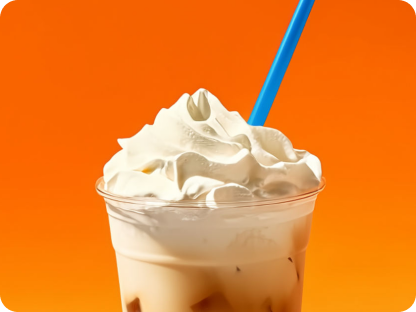
Coffee and beverage programs get the most immediate value. A vanilla or mint foam on an iced latte or hot chocolate arrives pre-flavored from the dispenser, so the barista skips the syrup pump and the topping stays consistent from the first cup to the last. For shops running seasonal specials, swapping a cylinder is faster than reformulating a syrup station.
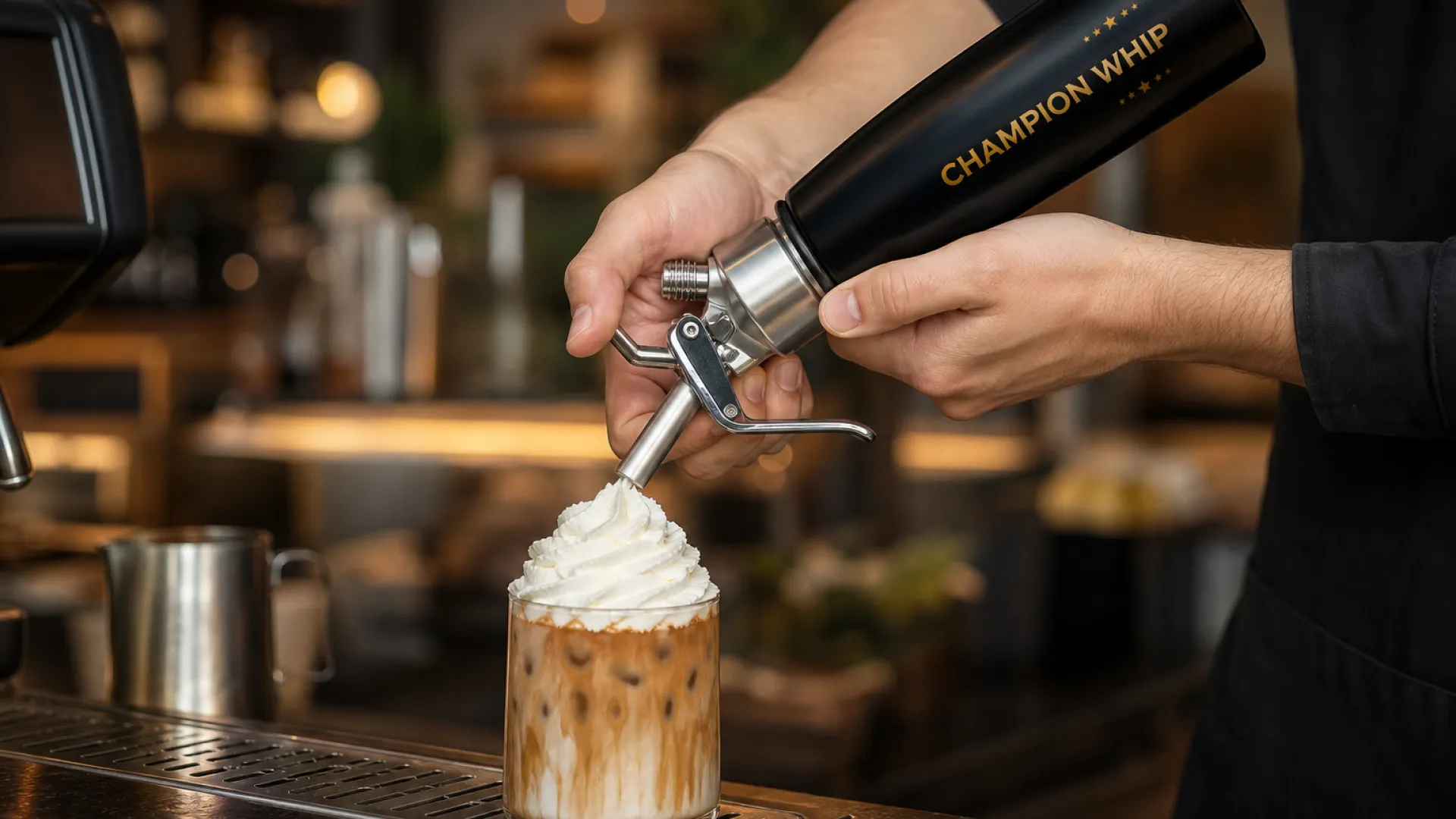
In pastry and dessert work, flavored foam finishes plates and display items without extra piping steps. Strawberry foam on shortcake, coconut on tropical desserts, blueberry on cheesecake: the flavor reads as part of the cream itself, which keeps sweetness in check and lets the base dessert stay unchanged. Caterers use the same approach for passed desserts where a topping must hold its flavor across a full service.
Bars treat flavored N2O as a foam tool for cocktails. A fruit-flavored foam on a sour or a tiki drink adds aroma at the first sip, and the foam holds long enough for table service. Because the flavor comes from the gas and not from a puree or syrup, the drink underneath keeps its intended balance and its texture.
Some programs go further and use the dispenser for rapid infusions, pulling flavor into spirits, oils, or syrups in minutes, and for espuma-style savory foams. Most buyers, though, stay with the fruit and classic families. For a wider tour of dispenser techniques, see what cream chargers are used for beyond whipped cream.
On the cost side, the efficiency story matters at volume: a 640g cylinder replaces roughly eighty or more 8g cartridges, which cuts cost per serving and reduces cartridge waste across a busy week. For a bar or cafe already running dispensers daily, adding a flavored cylinder changes the menu without changing the workflow.
Flavor Comparison: How to Choose
Choosing flavors is a menu decision before it is a purchasing decision. The comparison below summarizes how the main families behave in service.
| Flavor family | Aroma intensity | Perceived sweetness | Best fit |
|---|---|---|---|
| Fruit (strawberry, blueberry, watermelon, coconut) | Strong | Medium | Coffee toppers, dessert finishing, cocktail foam |
| Classic (vanilla, mint) | Medium | Low to medium | Coffee and hot chocolate, pastry, year-round menus |
| Candy styles | Strong | Sweet | Novelty drinks, events, limited-time specials |
Two selection rules hold up in practice. Fix the menu slot first, then pick the flavor that fills it; buying a novelty flavor without a menu home is the most common way flavored stock ends up sitting on a shelf. And test small before scaling: run a pilot at one size below your target volume, taste the foam on your actual base recipes, and only then commit to case quantities.
Buying Flavored N2O in Bulk: Specs, Compliance, and Suppliers
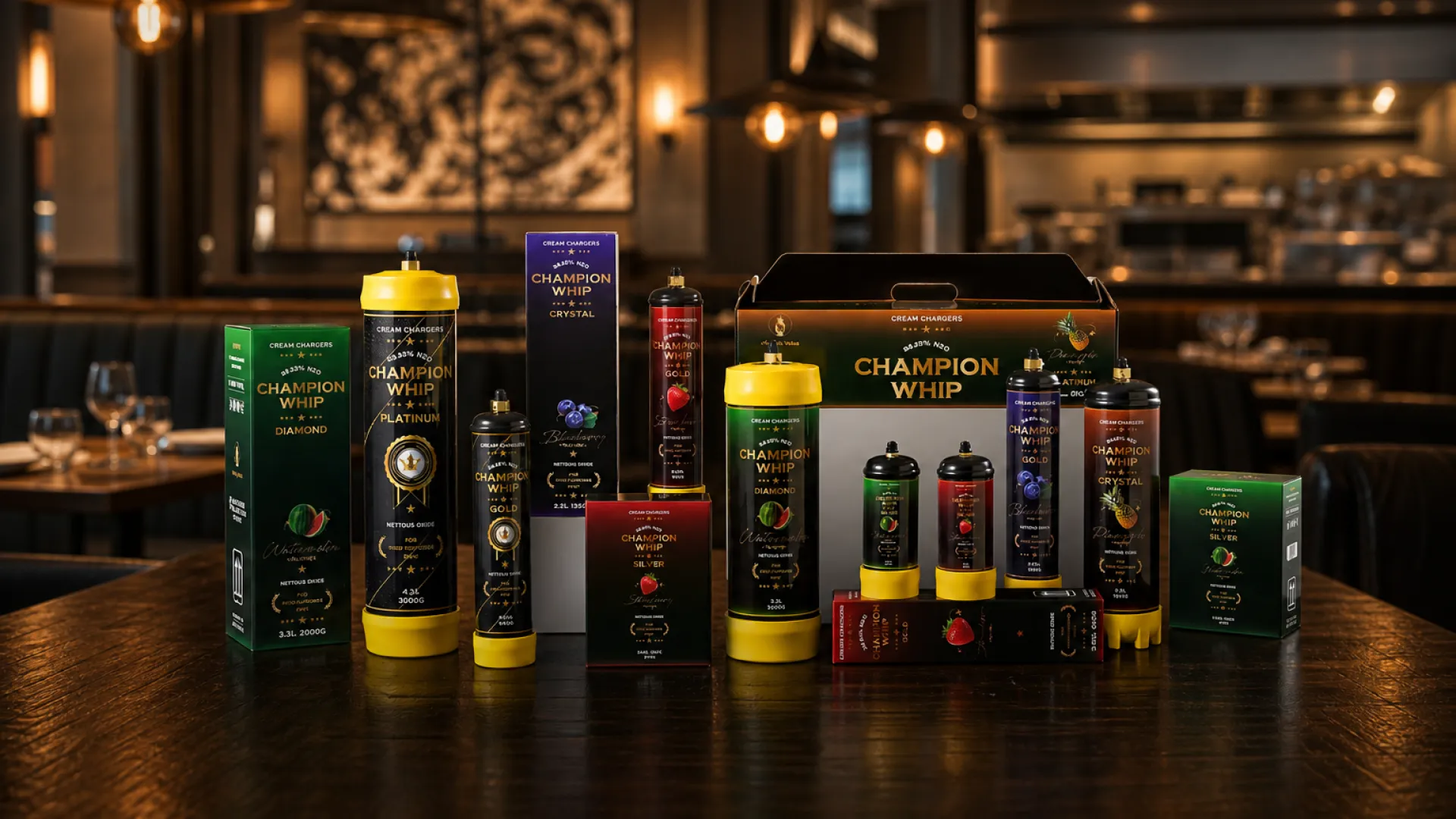
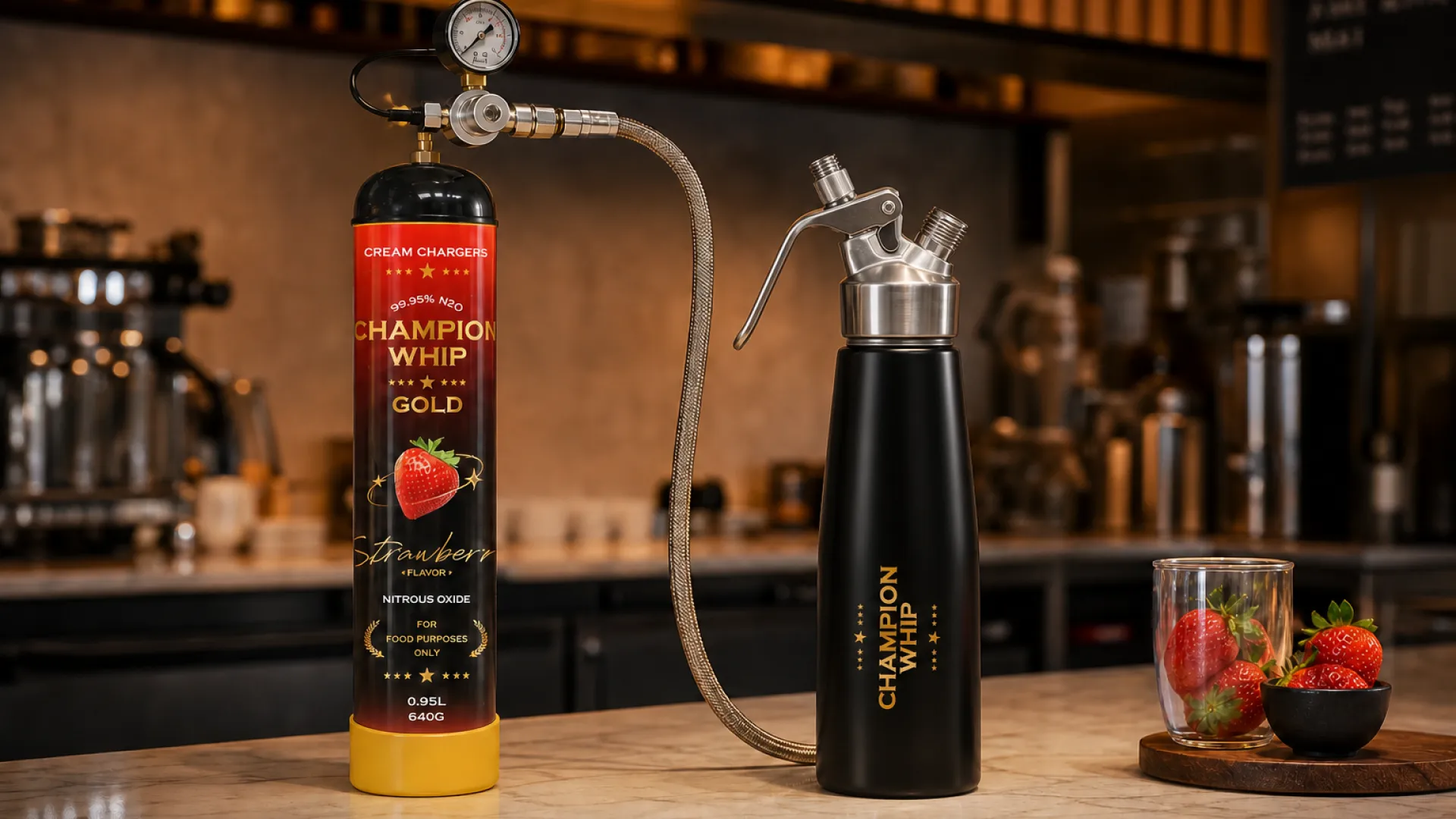
Flavored N2O ships in cylinder formats. Our flavored line runs from 320g up to 3000g, with the 640g flavored N2O cream charger as the volume seller for cafes and bars, and the larger sizes serving wholesale and private-label buyers. Cylinders pair with a pressure regulator, which controls the flow into the dispenser and keeps output consistent across services.
Compliance checks mirror unflavored N2O. Ask for a product specification sheet, a batch Certificate of Analysis, and a Safety Data Sheet, and confirm the gas meets your market's food-grade standard, such as E942 in the EU or the equivalent FDA regulation in the US. One statement belongs in every purchasing file for this category: flavored nitrous oxide is a culinary product, intended for food and beverage preparation only, and it should be sold, stored, and used accordingly.
On order structure, flavored lines follow cylinder wholesale conventions: pallet-level minimums for standard flavors, and higher minimums when the flavor itself is customized. Sampling matters more here than with unflavored stock, because the flavor profile is the product. Run samples through your actual menu items before setting a reorder schedule.
Supplier choice follows the same logic as any charger purchase: documented purity, batch consistency, and a supply schedule that matches your reorder cycle. We fill flavored N2O to the same food-grade standard as our unflavored line, and we support private-label buyers who want their own flavor lineup. Talk to us about custom flavors and OEM packaging, or go straight to wholesale terms if your volumes are ready. Flavored nitrous oxide rewards buyers who treat it as a menu tool with a supply chain attached: pick flavors that earn a menu slot, verify the documentation, and buy at the tier your volume justifies.
FAQ
Do flavored cream chargers actually flavor the cream?
Yes, but gently. The flavoring rides with the gas into the cream and distributes through the foam, producing a clear aroma and a subtle, integrated taste. Intensity depends on the flavoring concentration, the fat content of the cream, resting time after charging, and the charge-to-liquid ratio. Chilling the dispenser improves the result.
What flavors do cream chargers come in?
The market clusters into three families: fruit flavors such as strawberry, blueberry, watermelon, coconut, and pineapple; classic flavors such as vanilla and mint; and candy-style flavors such as rainbow candy. Fruit flavors lead the category, and most flavored fills come in 640g or larger cylinders.
Are flavored cream chargers food safe?
Yes, when both components are food grade: the gas should meet your market's food-grade standard, such as E942 in the EU or the equivalent FDA regulation in the US, and the flavoring should be food grade as well. Ask suppliers for a specification sheet, a batch Certificate of Analysis, and a Safety Data Sheet, and use the product for food and beverage preparation only.
Can I use flavored chargers with any whipped cream dispenser?
Flavored 8g cartridges fit any standard dispenser, but they are rare. Most flavored products are cylinders of 640g and above, which connect to a dispenser through a pressure regulator and hose. Check that your dispenser is rated for regulator-fed use before buying cylinders.
What sizes do flavored N2O cylinders come in?
Common flavored cylinder sizes run from 320g up to 3000g, with 640g as the most widespread size for cafes and bars. As a reference point, a 640g cylinder replaces roughly eighty or more 8g cartridges, which is why the format suits commercial volume.
Flavored chargers vs flavored syrup: which is better for drinks?
They do different jobs. A flavored charger builds flavor into the foam itself, adding aroma without extra sweetness or prep steps, while a syrup flavors the drink or dessert base with a stronger, sweeter profile. Many beverage programs use both: syrup in the base, flavored foam on top.
Where can I buy flavored N2O in bulk?
Factory-direct and wholesale suppliers carry flavored lines at pallet-level minimums for standard flavors, with higher minimums for custom flavors. Verify food-grade documentation and batch consistency before committing, and sample the flavor on your actual menu items first.

Elevate Your Creations with
Champion Whip
Explore our premium whipped cream chargers – designed for perfectionists.
View our Products


